
Thus says the LORD: Share your bread with the hungry, shelter the oppressed and the homeless; clothe the naked when you see them, and do not turn your back on your own.
Taken from today’s first reading, this quote from the prophet Isaiah is fitting, as I conclude these reflections on the first apostolic exhortation of Pope Leo XIV, Dilexi Te (I Have Loved You).
The fourth chapter of the document reflects on the Church’s continued concern for the poor within the last 150 years of Catholic social teaching, through Vatican II and the teachings of the Popes of the 20th and 21st century. The consistent social teaching of the church into the new millennium focused on human dignity, workers’ rights, and justice for the vulnerable. In reflecting on the tradition of Catholic social teaching, Pope Leo explains that poverty and inequality are not merely individual problems but “structures of sin.” He challenges Christians, therefore, to relate our complaints and sufferings to the lived experience of the poor, so that we may be evangelized by them and their experiences of adversity.
The fifth and final chapter of this exhortation is titled A Constant Challenge. Pope Leo begins this chapter with an explanation as to why he chose to spend much of the document on the church’s history.
Indeed, caring for the poor is part of the Church’s great Tradition, a beacon as it were of evangelical light to illumine the hearts and guide the decisions of Christians in every age. That is why we must feel bound to invite everyone to share in the light and life born of recognizing Christ in the faces of the suffering and those in need.
In presenting a history of Christ’s love of the poor through the lived mission of the Church, he places its ongoing task before us.
No Christian can regard the poor simply as a societal problem; they are part of our “family.” They are “one of us.” …we are asked to devote time to the poor, to give them loving attention, to listen to them with interest, to stand by them in difficult moments, choosing to spend hours, weeks or years of our lives with them, and striving to transform their situations, starting from them. We cannot forget that this is what Jesus himself proposed in his actions and by his words.
In this final chapter, Pope Leo points to an important reality; while the “rich” are called to take care of the poor, the opposite is also true, the poor take care of the “rich.”
This is a remarkable fact confirmed by the entire Christian tradition. Lives can actually be turned around by the realization that the poor have much to teach us about the Gospel and its demands. By their silent witness, they make us confront the precariousness of our existence. The elderly, for example, by their physical frailty, remind us of our own fragility, even as we attempt to conceal it behind our apparent prosperity and outward appearance.
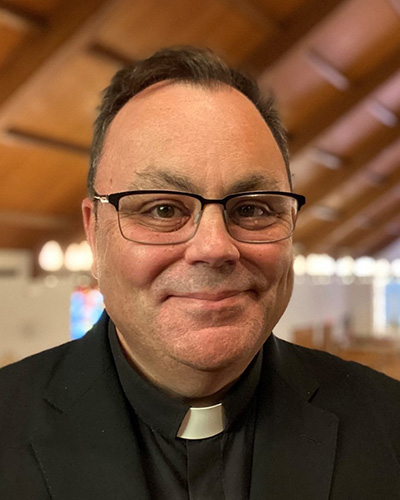
A key takeaway from Pope Leo’s exhortation, and my reason for reflecting on it with you, is to challenge us on both a personal and communal level as a parish. As a pastor, I feel called to reflect deeply on these words:
Indeed, any Church community, if it thinks it can comfortably go its own way without creative concern and effective cooperation in helping the poor to live with dignity and reaching out to everyone, will also risk breaking down, however much it may talk about social issues or criticize governments. It will easily drift into a spiritual worldliness camouflaged by religious practices, unproductive meetings and empty talk.
It is my hope that with Pope Leo’s guidance, we will be transformed: moving from indifference and distance to genuine communion with the poor, letting that transformation be a constant challenge that shapes Christian identity and mission.
You can find Dilexi Ti on the Vatican website, www.vatican.va.
Some reflection questions:
- Where is Christ inviting me to move from sympathy to real closeness with the poor in my daily life, and what concrete step is he asking of me now?
- If the poor were to describe our parish, would they say they feel at home here—and what changes would help us become more truly a Church “with and for” the poor?
SNOW COLLECTION – Thanks to all who contributed to the special collection for winter weather costs. The total amount received thus far is $6,053. In the last two years, the collection yielded an average of $7,700. We budget for snow removal based upon previous years. The average cost of snow removal over the last two years was $13,850. This year we have spent over $36,000 so far. An additional note is that snowstorms reduce attendance and have an impact on the weekly offertory. If you can make up for a missed week of offertory contributions or make a contribution toward snow removal costs, it would be greatly appreciated. Thank You!
Peace!